There are so many ways to use vertical structures to maximize your garden space and even encourage healthier plants. Whether you're hoping to add some vertical structures to your apartment balcony, increase the amount of growing space in your backyard garden, or create an easy access spot for lots of fresh herbs right outside your kitchen window, a vertical garden structure not only adds more outdoor space for growing, but also creates visual appeal in virtually any garden area.
Whether you're looking for an inexpensive, DIY solution to a limited space problem, or you'd rather buy a structure, there are plenty of vertical gardening methods to try. Choose the one that appeals to you (and works best for your favorite fresh herbs and vegetables)!
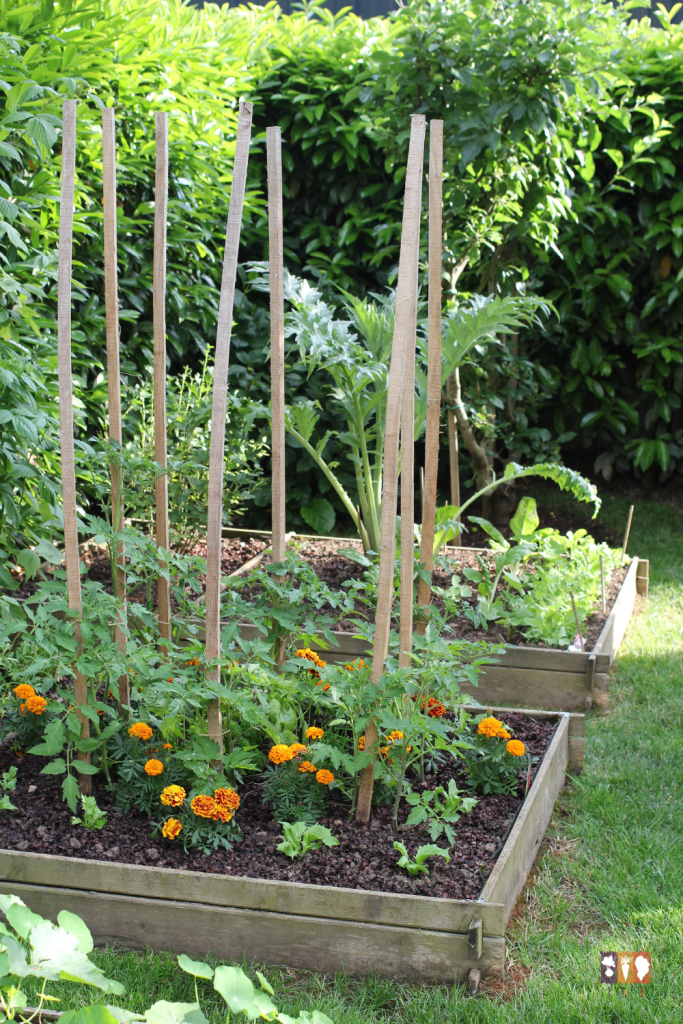
Benefits of Vertical Gardening
Most people think of vertical gardening as a way to expand small spaces, and that is definitely true. But it's certainly not the only benefit. Here are a few of the top reasons I love using vertical space to grow fresh produce:
- Better airflow. Letting plants climb and stretch tends to improve air circulation, allows them to get more sunlight, and can help to prevent fungal diseases.
- Prevents rot. In addition to giving plants better airflow, vertical structures keep your produce off the ground, which can prevent rot (think cucumbers and squashes, especially!).
- Easy access. Many people enjoy getting to harvest and care for their plants without having to bend or kneel down.
- Higher yield. Of course, one of the great things about vertical structures is that they provide more space for growing, which is ideal for higher yields.
This post may contain affiliate links, which simply means I may earn a commission off of links at no extra cost to you. Thank you for supporting my site!
The Best Plants to Grow Vertically
You can grow fruits, vegetables, and fresh herbs on vertical structures or in planters. Here are a few ideas!
Fruits
- Blackberries
- Grapes
- Melons
- Raspberries
Vegetables
- Cucumbers (Learn how to grow cucumbers vertically)
- Green beans and pole beans
- Peas (snow peas, sugar snap peas, and green peas)
- Pumpkins
- Spinach, lettuce, and other leafy greens
- Squash (summer squash, spaghetti squash, and winter squash)
- Tomatoes
Herbs
The following herbs grow well in compact containers, so they're perfect for tiered planters and vertical surfaces.
- Basil (Learn how to prune basil for huge yields!)
- Chives
- Mint
- Oregano
- Parsley
- Rosemary
- Thyme
You can find out more about my favorite plants to grow vertically and why they work well in this blog post: The Best Vegetables for Vertical Gardening.
10 Vertical Gardening Methods (DIY and Store-Bought)
From easy DIY tepees to Amazon's best vertical planter solutions, here are 10 great ideas for expanding your garden space so you can grow more healthy produce.
1. Ladder Planter/Tiered Planter
You can make your own ladder planter with a few scrap pieces of lumber and some screws, or buy one that's ready to go (I like this tiered planter from Amazon). Many of the "ladder planter" designs can lean up against the wall of your house, barn, or porch, while others have their own legs so you can stand them anywhere.
With some good potting soil (and adequate drainage holes), tiered planters are a great solution for growing a living wall of herbs or flowers.
2. Cattle Panel Arch Trellis
You can make a heavy-duty arch trellis with a 16' sheet of cattle panel and some t-posts, or secure it between raised beds with u-bolts or truss head screws. Cattle panels make a very strong trellis that's ideal for growing heavier plants and withstanding strong wind. It's a great solution for plants like cucumber vines, cantaloupes, or squashes.
If you don't want to make one, there are plenty of commercial garden trellises you can buy, like this arched trellis from Amazon.
3. Trellis Netting
You can do a lot with some heavy-duty trellis netting! String it between t-posts, strong sticks stuck vertically in the ground, bamboo poles, garden stakes (I like these 8' stakes from Tractor Supply), or old ladders.
Trellis netting is a simple way to set up an ideal spot for growing runner beans, peas, cucumbers, or climbing flowers like morning glories.
4. Wood Frame Vertical Trellis (for Raised Beds)
A wood-frame vertical trellis is an easy and practical way to provide extra support and climbing room in a raised garden bed. If you love hands-on projects, check out this 1-hour DIY trellis that screws into a raised bed. It's built with 2x3s and nylon trellis netting.
5. Greenstalk 5-Tier Vertical Planter
The Greenstalk 5-Tier Vertical Planter from Epic Gardening is one of my favorite, easy options that takes up virtually no space and can produce a LOT of plants. It's the perfect vertical garden planter for growing leafy greens, strawberries, flowers, or a vertical herb garden. It also has it's own reservoir which distributes water easily to each plant.
If you have 2 square feet and a sunny spot, this is a great way to grow your own garden without taking up much space.
6. Tepee Trellis
You can build your own tepee trellis in 1 hour with some stakes and twine or zip ties. (Here's the exact method I used to build my tepee trellis.) Or, keep it easy and buy an expandable tepee from Amazon for less than $40.
Tepee trellises are a super easy vertical garden design idea that's perfect for growing pole beans, peas, cucumbers, gourds, and small melons.
7. DIY Tomato Cages
You can make very heavy-duty DIY tomato cages with some remesh wire and bolt cutters (check out this video to see how). They last forever! They're great for letting tomato plants climb but also work well for cucumbers, berries, and squashes. Plus, you can easily move them around from year to year.
8. Folding A-Frame Trellis
If you want something that's fairly easy to make and also easily transportable, a folding a-frame trellis may be just the thing! Check out this lightweight DIY A-frame design made with 2" boards.
This would be a great option for setting on top of a raised bed or in an in-ground garden.
9. Pallet Planter
A vertical DIY pallet planter is a cheap and easy option for adding space into small gardens or for growing an edible garden on your porch or balcony. Here's how to make a pallet planter for just a few dollars with an old pallet and some landscape fabric.
10. Planter Box Trellis
This is a great way to grow vertical vegetables when you need some depth but don't have an in-ground garden or traditional raised beds. A planter box trellis starts at ground level with a deeper box and has a built-in trellis on the back or sides. It's one of the more attractive ways to grow vertical plants, perfect for tomatoes, cucumbers, and climbing flowers. Plus, you can also hang baskets higher up at eye level. Here are a few good options: